
🚀 TL;DR
- Most pricing negotiations happen because consultants lack clear positioning, structured offers, and confidence—not because clients are unreasonable.
- Discounting weakens authority and signals uncertainty; strong boundaries and standardized offers reduce negotiation pressure.
- Anchor value before price by tying your work to business outcomes like revenue, efficiency, and risk reduction.
- Use tiers, silence, and scoped trade-offs to control pricing conversations without being adversarial.
- The strongest leverage comes from preparation: a full pipeline, practiced responses, and a clear walk-away number.
I recently closed a $105,216.70 month without discounting a single proposal.
Not entirely because I'm better at sales than you. Not because I got lucky with perfect-fit clients who never questioned price.
I closed those deals because I stopped treating negotiation like a chess match. Instead, I built a business where negotiation rarely happened—and when it did, I controlled the frame.
In this guide, I'll show you how to handle pricing discussions without sacrificing your authority or your margins. You'll learn how to:
- Anchor value before discussing cost
- Reframe objections without defensiveness
- Recognize when walking away is the smartest business move you can make
Why solopreneurs struggle with negotiating prices
Fear of rejection or damaging the relationship
You've spent weeks nurturing this lead. They finally agreed to a call. When you present your solution, they seem interested, and then comes the price pushback.
Your brain screams: "If I hold firm, they'll walk."
So you cave. You offer a discount, extend payment terms, or throw in extras—anything to keep the deal alive.
This fear operates on a faulty assumption—that saying no damages relationships.
In reality, the opposite is true. Clients respect consultants who hold boundaries. Discounting signals you weren't confident in your original price makes them question the value of everything else you said.
When the price feels personal
You are the product in a consulting business. So when someone questions your price, it feels like they're questioning your worth.
This emotional attachment makes negotiation excruciating. You take price objections as personal rejection rather than a normal business conversation.
Detachment is critical. Your rate reflects market positioning and business outcomes you deliver—not your inherent value as a human.
When you separate the two, negotiation becomes a business discussion instead of an identity crisis.
No structure means no boundaries
Most consultants don't have clear offers. They customize everything, which makes everything feel negotiable.
Without defined packages, scope, or contract terms, clients naturally test boundaries. They ask for cost savings here and extra deliverables there. You can't blame them—you haven't drawn clear lines.
Structured offers solve this.
When your pricing, deliverables, and terms are standardized, you can point to the structure itself rather than defending arbitrary decisions. "This is how the offer works" carries more weight than "This is what I think it should cost."
Inexperience with sales conversations
Most solopreneurs aren't trained in sales. They wing it. They go into pricing discussions without preparation, hoping their expertise speaks for itself.
It doesn't.
Sales professionals rehearse objections, practice pricing conversations, and develop negotiation techniques they can deploy without thinking. Consultants often freeze when challenged on price because they've never practiced the response.
This gap shows up most when clients deploy common negotiation tactics. You don't recognize them, so you react emotionally instead of strategically.
Scarcity mindset kills your leverage
When your pipeline is thin, every opportunity feels critical.
You can't afford to lose this deal. Your rent is due. You haven't signed a client in weeks. So you accept terms you know aren't favorable because something is better than nothing.
Scarcity breeds desperation. Desperation shows up in your voice, body language, and willingness to bend. Clients sense it. They push harder.
The solution isn't just mindset work—it's building consistent lead generation so no single deal determines your survival. When you have options, you negotiate differently.
Seeking validation more than a fair deal
Many consultants undercharge because they need to feel liked. They want the client's approval more than they want proper compensation.
This pattern runs deep. You convince yourself that being generous, flexible, and accommodating will earn loyalty. Sometimes it does—from clients who drain your energy and pay the least.
Premium clients don't expect you to be cheap. They expect you to be confident, clear, and worth the investment. When you show up seeking validation, you attract people who exploit that need.
Negotiation becomes easier when you're selling business outcomes instead of seeking approval.
10 strategies to negotiate your rates successfully
1. Anchor the value before you name the price
Numbers mean nothing without context.
If you lead with price, the client has no frame of reference. They'll compare you to cheaper alternatives or negotiate based on gut feel rather than value delivered.
Smart consultants build the case first:
- Walk through the problem in detail
- Quantify the cost of inaction
- Illustrate what success looks like
- Connect outcomes to their revenue or efficiency goals
Only then do they introduce pricing—and by that point, the number feels justified.
When I closed that $105K month, every proposal started with the client's business outcomes: revenue impact, time savings, risk reduction. Price became the logical conclusion, not the starting point of negotiation.
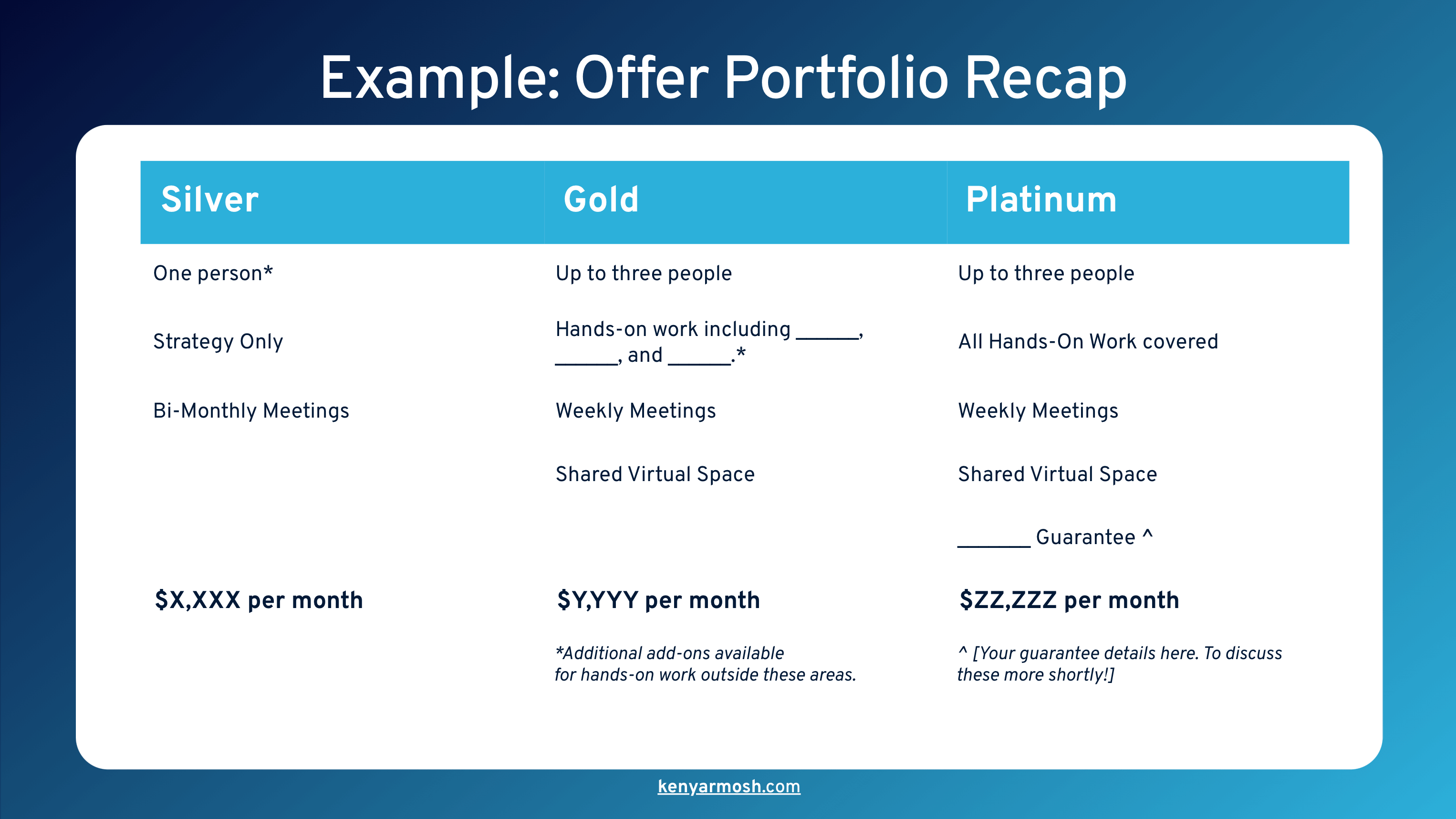
2. Use pricing tiers to create structure
Single-price offers invite negotiation. Tiered packages shift the conversation.
Instead of "yes or no," clients now evaluate "which option fits best?" This reframing gives you control. They're comparing your offerings against each other—not against your competitors.
Structure your tiers around scope, not just price:
- Intro tier: Solves a specific problem with defined boundaries
- Core tier: Delivers comprehensive results with full implementation
- Premium tier: Includes ongoing support, exclusive access, or extended engagement
This approach also establishes your minimum rate without saying it directly. The lowest tier signals the floor. Anything below that is off the table.
3. Don't be the first to drop a number
Whoever mentions price first loses leverage.
Ask about their budget or investment range. Many clients will tell you. If they deflect, you've still learned something—they want you to anchor low so they can negotiate down.
When you must quote first, bracket high. State your rate confidently and let silence do the work. Resist the urge to justify, explain, or offer alternatives immediately. It's best to give them space to respond.
If they push back, you have room to move. If they don't, you've set a strong anchor.
4. Offer choices, not ultimatums
"Take it or leave it" rarely works unless you have overwhelming demand.
Instead, present options that serve different needs. A client hesitant about cost might prefer a smaller project first. Someone concerned about risk might want phased contract terms with clear milestones.
Choice creates psychological momentum. They already imagine working with you—they just need the right entry point.
This also positions you as flexible without being weak. You're accommodating their situation, not caving on your value proposition.
5. If you reduce the price, reduce the scope too
Never lower your rate without changing what's included.
Discounting with the same deliverables trains clients to negotiate every time. It also tanks your margins and breeds resentment when you're working for less than you're worth.
Instead, tie price to scope. "At that budget, we'd focus on X and Y, but remove Z." This maintains your rate integrity while giving clients a real decision to make.
Consulting fees should always reflect the work delivered. When both sides understand that relationship, negotiations become easier.
6. Say your price—then stay quiet
Silence is a negotiation technique most consultants fear.
You state your rate, then immediately start talking. You explain, justify, offer alternatives, and fill the void. This signals discomfort with your own pricing.
Try this instead: quote your price, then stop. Let the client respond first. The discomfort you feel is the same discomfort they're processing. Whoever speaks first usually concedes.
I've watched leads agree to rates I thought were too high—simply because I stayed quiet long enough for them to decide it was worth it.
7. Use fairness as a shared goal
Frame negotiation as a collaborative process, not a battle.
"I want this to be fair for both of us" shifts the dynamic. You're not defending your price—you're both working toward an equitable arrangement.
This language also gives you permission to push back without sounding defensive. "At that rate, I couldn't deliver the quality you expect, which wouldn't be fair to either of us."
Market conditions, your negotiation expertise, and their budget constraints all factor into what's fair. Naming that openly builds trust.
8. Decide your walk-away point ahead of time
You can't negotiate confidently if you haven't decided what's unacceptable.
Before every sales conversation, determine your minimum rate. Not your ideal rate—your floor. The number below which the deal doesn't make sense, no matter how much you want it.
Write it down. When the conversation gets tense and you feel pressure to cave, that number keeps you grounded.
Walking away from bad deals is how you protect margin and preserve energy for clients who actually value your work.
9. De-risk the deal—don't discount it
Clients rarely object to the price because it's too high. They object because they're unsure you'll deliver.
The real issue is buyer doubt.
Instead of cutting your rate, address the uncertainty:
- Offer a smaller pilot project to prove results
- Provide case studies showing similar outcomes
- Structure payment terms around milestones
- Share testimonials from clients in their industry
- Guarantee specific deliverables with clear timelines
These negotiation tactics reduce perceived risk without touching your pricing. You maintain authority while making the decision easier for them.
10. Practice the conversation before you have it
Negotiation training doesn't happen in the moment. It happens in preparation.
Role-play with a peer. Record yourself stating your price and responding to objections. Write out your answers to common pushback so you're not scrambling when it happens live.
Sales professionals spend hours rehearsing. Consultants often wing it, then wonder why they fold under pressure.
Negotiation capability improves with practice. The more you prepare, the calmer you'll be when someone challenges your rate. That quiet confidence is what closes deals at full price.
Protect your margins by negotiating from strength
That $105K month happened because I stopped entering conversations that required negotiation in the first place.
When your offers are clear, your positioning is strong, and your pipeline is full, pricing discussions become simpler. You're not convincing anyone of your value—you're helping qualified clients decide if the relationship is right.
Start by auditing where you're losing margin. For example:
- Are you discounting out of fear?
- Accepting bad contract negotiations because your pipeline is empty?
- Underpricing because you haven't built negotiation expertise?
Fix those upstream problems, and pricing conversations transform.
You'll close deals that preserve your authority, protect your profitability, and attract clients who respect your worth.
