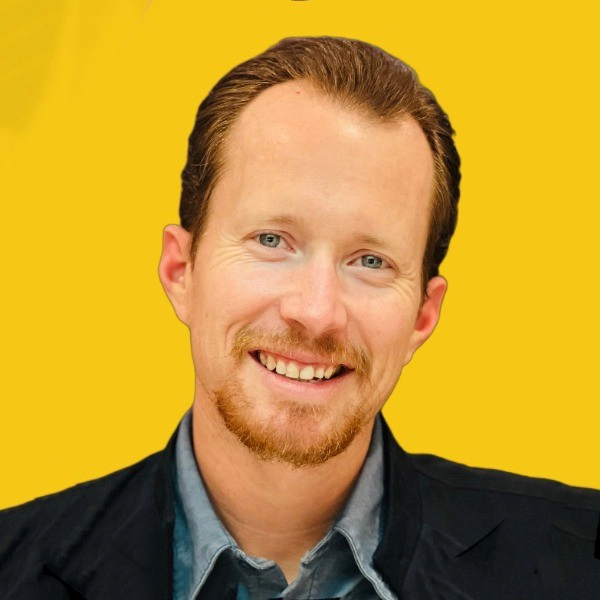

Ken Yarmosh is a product strategist who helps organizations, businesses, VCs, and technology developers maximize their Internet and mobile investments.

Need help with your iPad, iPhone, or Android app? I'm ready to help you get app savvy. Let's go! »

Goldilocks 2.0

I have a piece up at TCS Daily entitled Goldilocks 2.0. I think the Editor described it best in the tease:

Goldilocks 2.0

Ken Yarmosh on Web 2.0, its fans, its critics, and why everyone is a little bit wrong and a little bit right.

I wrote this commentary because I saw somewhat more of a middle ground in the ‘digital economy’ discussion between the likes of Anderson, Keen, and others (although, critics might argue that I fell more on the side of Anderson). Specifically, I argue that Web 2.0 is neither a digital utopia nor a digital anarchy.

Here is one of the key paragraphs of the piece:

The link is just one way to separate the signal from the noise. Thankfully, it alone does not dictate the talented, less it yield a means of digital populism and a true democratization of taste. Not all links are created equally. A link from Joe Blogger, for example, does not carry the same weight in search engine algorithms as one from the New York Times or ABC News. Thus, just as in more traditional arenas of media and society, multiple levels of metrics and filtering help not only recognize the popular but the talented.

Keen writes some things that are of concern to me, particularly when it comes to narcissism and “personalization” (this particular excerpt comes from his major thought piece on Web 2.0):

Web 2.0 technology personalizes culture so that it reflects ourselves rather than the world around us. Blogs personalize media content so that all we read are our own thoughts. Online stores personalize our preferences, thus feeding back to us our own taste. Google personalizes searches so that all we see are advertisements for products and services we already use.

But again, I think my main contention is that these aren’t necessarily new trends, although they might be exacerbated in a digital world. For example, I can buy a newspaper, listen to a talk radio station, and watch a cable news channel, all of which reflect a certain perspective and bias that I like.  Similarly, advertisers have historically targeted their advertisements using focus group studies, demographic information, etc. Google just does that a different (and more effective) way.

Find this interesting? Subscribe now or keep reading.

You can also check out my book App Savvy, which is about iPad and iPhone strategy and development.

Posted on December 7, 2006

Newer:
Older:

App Savvy: An O'Reilly Book.

About Ken Yarmosh

Hi. I'm your host Ken Yarmosh, a mobile impresario, O'Reilly author, and entrepreneur based in the DC area. I've been writing here since 2005 with a focus on startups, product strategy, mobile, and more generally, digital technology's impact on business, life, and culture.
Learn more »

  • RSS
  • Contact